
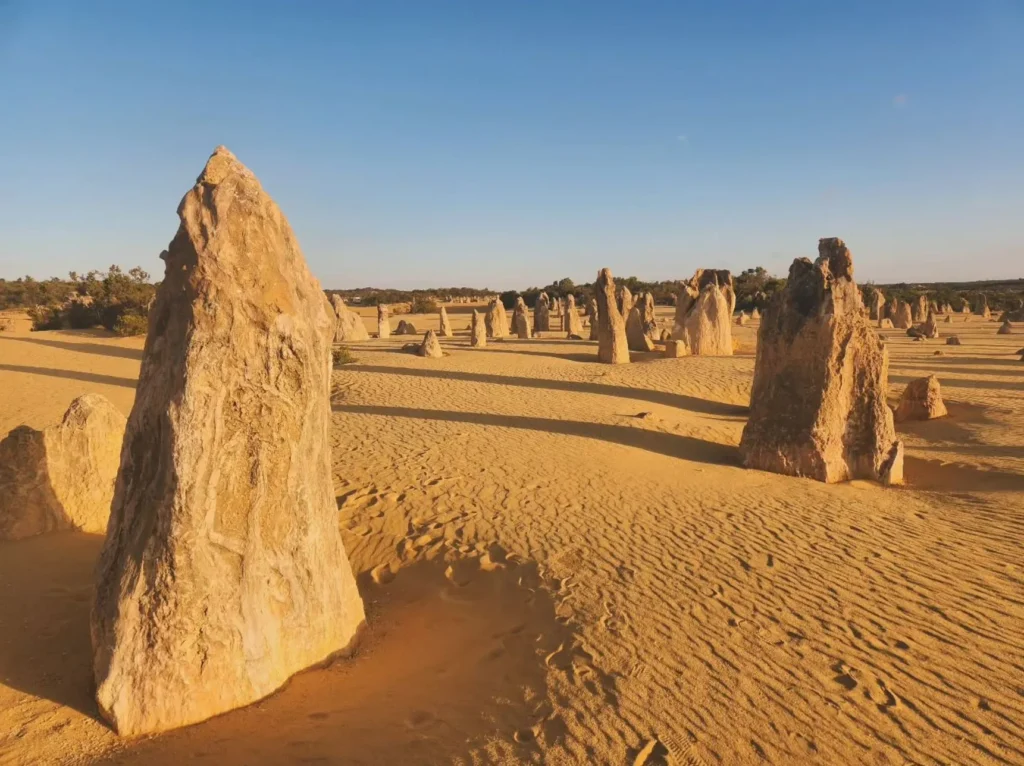
Every visitor to Nambung National Park eventually finds themselves standing among the golden limestone pillars and wondering the same thing: how old are the Pinnacles in WA? When you first see them rising from the desert landscape — thousands of rock formations scattered like a forgotten army — it’s hard to believe they were once buried beneath an ancient sea. I’ve been guiding through Western Australia for years with Pinnacles Tours, and even now, each time I walk the loop trail, I find a new story in the sand. The Pinnacles aren’t just pretty shapes; they’re a 25-million-year-old record of Australia’s geological soul.
The Geological Clock Beneath the Sand
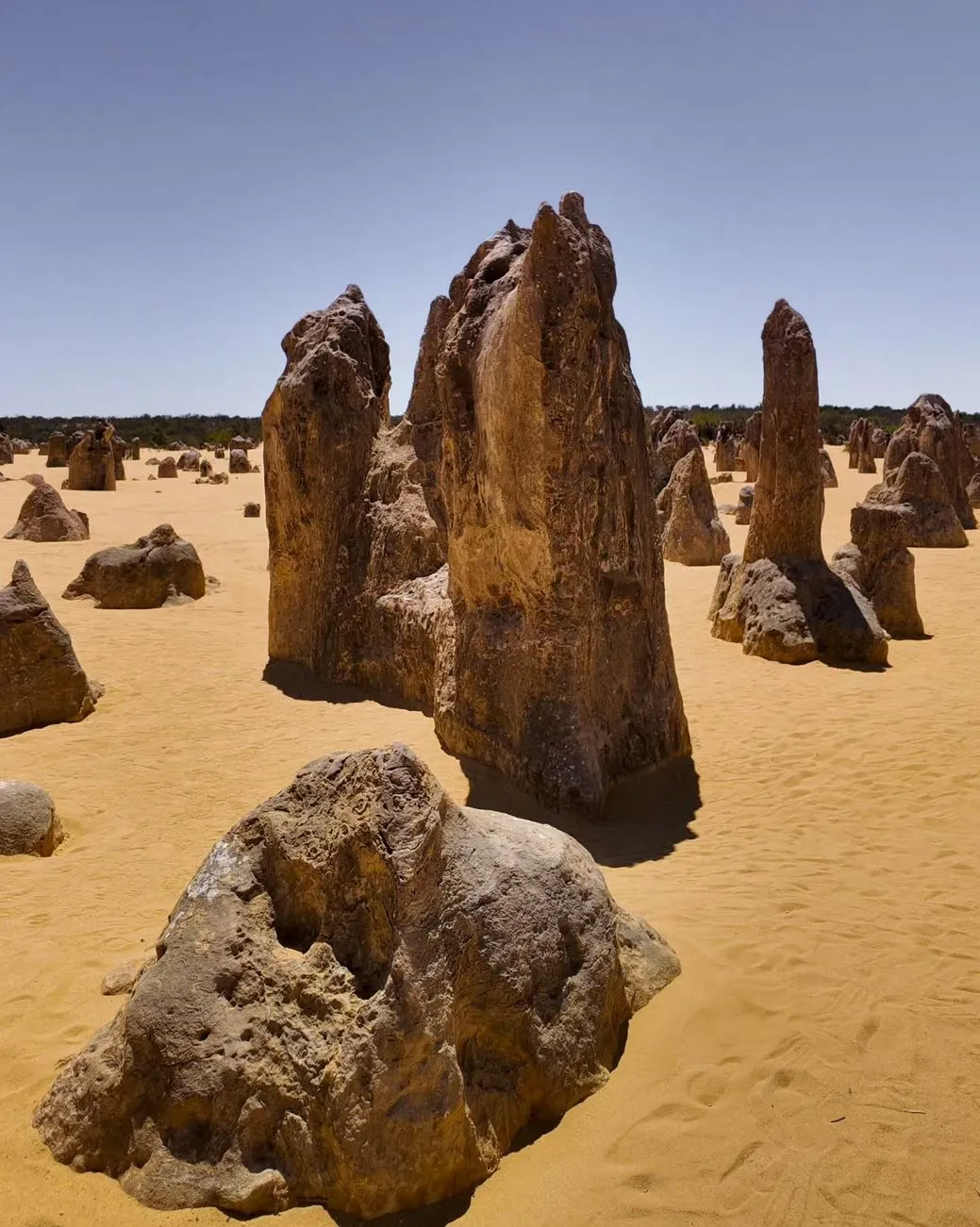
Scientists estimate the Pinnacles’ limestone formations began taking shape around 25 million years ago, before Perth even existed. Back then, this region was a coastal paradise — a shallow sea teeming with marine life, coral beds and tiny organisms that left behind layer upon layer of lime-rich sand. Millions of years of wind and water sculpted that sand into the Tamala Limestone — the building block of the Pinnacles. Later, shifting dunes and erosion carved the surreal geological formations we see today. Here’s a snapshot of the timeline that turned seashells into stone giants:
| Geological Period | Approx. Age (Years) | Key Process | Environment |
|---|---|---|---|
| Late Miocene | ~25 million | Shell fragments compacted into lime-rich sediment | Shallow sea |
| Pleistocene | ~500,000 | Microbial cementation strengthened the limestone | Coastal dune system |
| Holocene | ~6,000 | Wind erosion exposed limestone pillars | Arid desert landscape |
When I take travellers on a Pinnacles Tour from Perth, this is the part that blows their minds — the realisation that these weird pillars are older than the human species itself.
From Sea Floor to Desert: How Time, Wind and Water Shaped It All
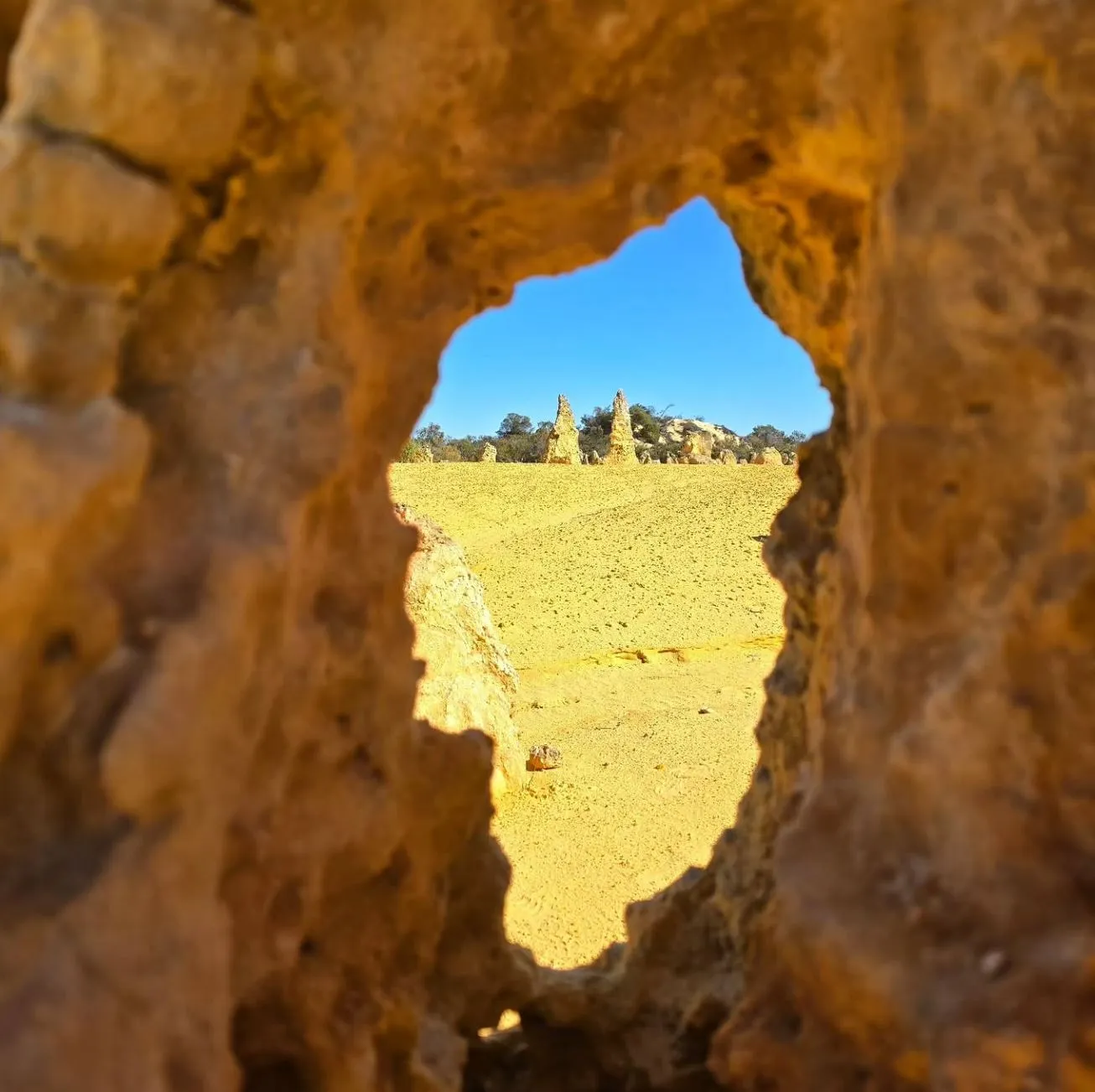
You don’t need a degree in geology to appreciate how wild this is. The story starts in the dunes. As groundwater moved through the sand, it carried carbon dioxide, forming a weak acid that slowly dissolved and re-deposited calcium carbonate. That’s nature’s cement — the same process that creates cave waterholes and stalactites underground. Eventually, this process — microbial cementation — glued grains of sand together, and over time, wind scoured away the softer outer layers. What was left behind? The limestone pillars that stand across Nambung’s yellow plains today are dotted among shifting sand dunes and solutional depressions. Each Pinnacle tells its own story. Some have sharp, jagged peaks; others resemble tombstones or termite mounds. Locals call them “pinnacle shapes” but geologists see ancient fingerprints of erosion, water flow and iron-rich minerals staining the surface red.
Reading the Rocks: Scientific Clues and Dating Techniques
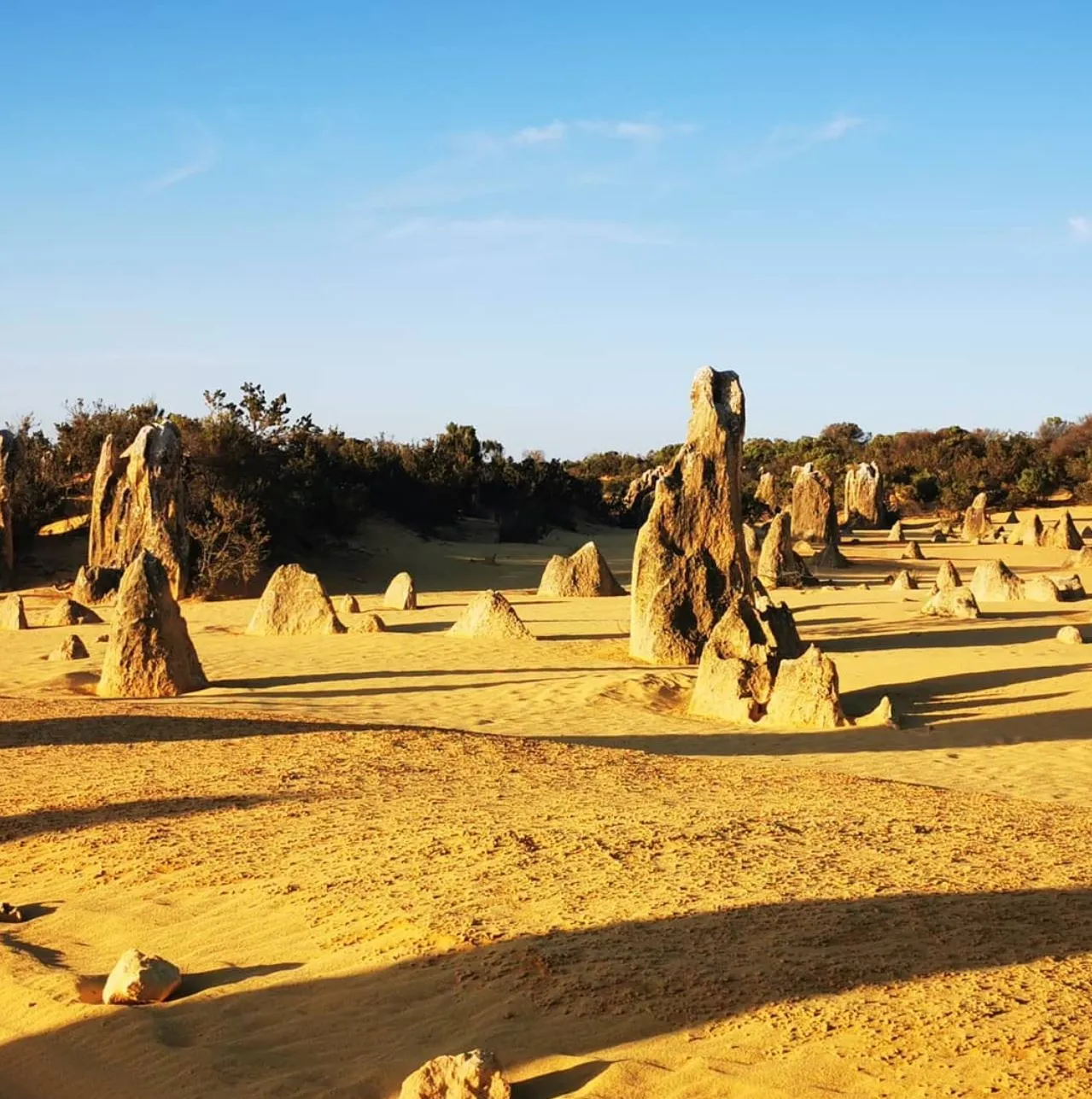
If you’ve ever wondered how scientists know the Pinnacles age so precisely, the answer lies in a mix of dating techniques and scientific methods — including radioactive decay. By analysing trace elements trapped in the limestone, geologists can calculate when certain minerals formed or changed. They also look at stratigraphy — how the sand layers stack up — to determine how long the area has been dry or underwater. These are the same methods used to date fossils in the marine environments surrounding ancient Western Australia. Even more fascinating, chemical analysis shows variations in carbon dioxide trapped in the rock, hinting at the climate patterns millions of years ago. So when you visit, remember you’re literally walking through Australia’s ancient climate archive.
Cultural Time: The Dreaming Stories of Country
Before science tried to explain these formations, Aboriginal people — particularly the Yued group of the Noongar Nation — held stories that connect the Pinnacles to ancestral beings. These Dreaming stories tie the shapes to events and lessons from creation time, giving the landscape deep cultural meaning. Today, we ask visitors to travel with respect. Cultural tourism here is about understanding that this is not just a geological wonder; it’s a living Country. As one elder once said to me, “The Pinnacles were here before the white man’s calendar — they don’t need your dates to be real.” Hard to argue with that.
Wildlife and Ecology Among the Rocks
Looks like a desert, feels like a desert, but the Pinnacles are alive! I’ve seen emus, goannas, galahs and even the odd kangaroo hopping between the rocks. In the cooler hours, the desert hums with insects and the occasional wildlife encounter that makes every visit unique. Head a little further west and you’ll hit the Cervantes coast, where sea lions bask on the rocks and humpback whales cruise past during migration season. If you join an extended Pinnacles Tour from Perth, many operators (including us at Pinnacles Tours) combine a stop at Jurien Bay, where you can swim with whale sharks and manta rays in one of Australia’s most pristine marine environments.
The Story Beneath Your Feet
Before you head into the dunes, pop into the Discovery Centre near the entrance to Nambung National Park. It’s more than just a tourist stop – it’s a mini-museum that unpacks the science, culture and conservation of the area. Inside, you’ll find interactive exhibits on:
- How geological features like these form in lime-rich sand
- The role of iron-rich minerals in the Pinnacles’ golden glow
- How microbial cementation turned loose sand into stone
- Why solutional depressions and erosion patterns vary across the park
There’s even a section on Australian Pinnacle Tours through the ages – from early explorers in Model Ts to modern eco-tour coaches. If you’ve got kids or just love a good yarn, this is the spot to get your bearings before hitting the walking trail.
Practical Travel Tips
Access & Entry Fees
The Pinnacles Desert is inside Nambung National Park, about 200 km north of Perth. Entry fees apply – roughly $17 per vehicle for a holiday pass, or you can use an annual WA Parks Pass if you’re road-tripping. Roads are well-maintained gravel; 2WD is fine in dry weather, though I’ve seen a few overconfident sedans get bogged near the dunes.
Walking & Boardwalk Trails
- 1.5 km boardwalk trail perfect for sunrise or sunset strolls.
- The loop takes about 45 minutes to drive, depending on how many times you stop for photos.
- Summer days are hot, so pack a hat, 2 litres of water per person and sunscreen.
Facilities & Times
- Park gates open at sunrise and close around 9 p.m. (check seasonal hours).
- Discovery Centre open daily 9:30 a.m. to 4:30 p.m.
- Best months: April to October — cooler temps, fewer flies and pastel sunsets.
If you don’t want to worry about logistics, book a Pinnacles Tour from Perth — it’s the easiest way to combine the desert with coastal highlights like Lancelin’s sandboarding dunes or Cervantes’ seafood shacks.
The Desert Landscape: More Than Meets the Eye
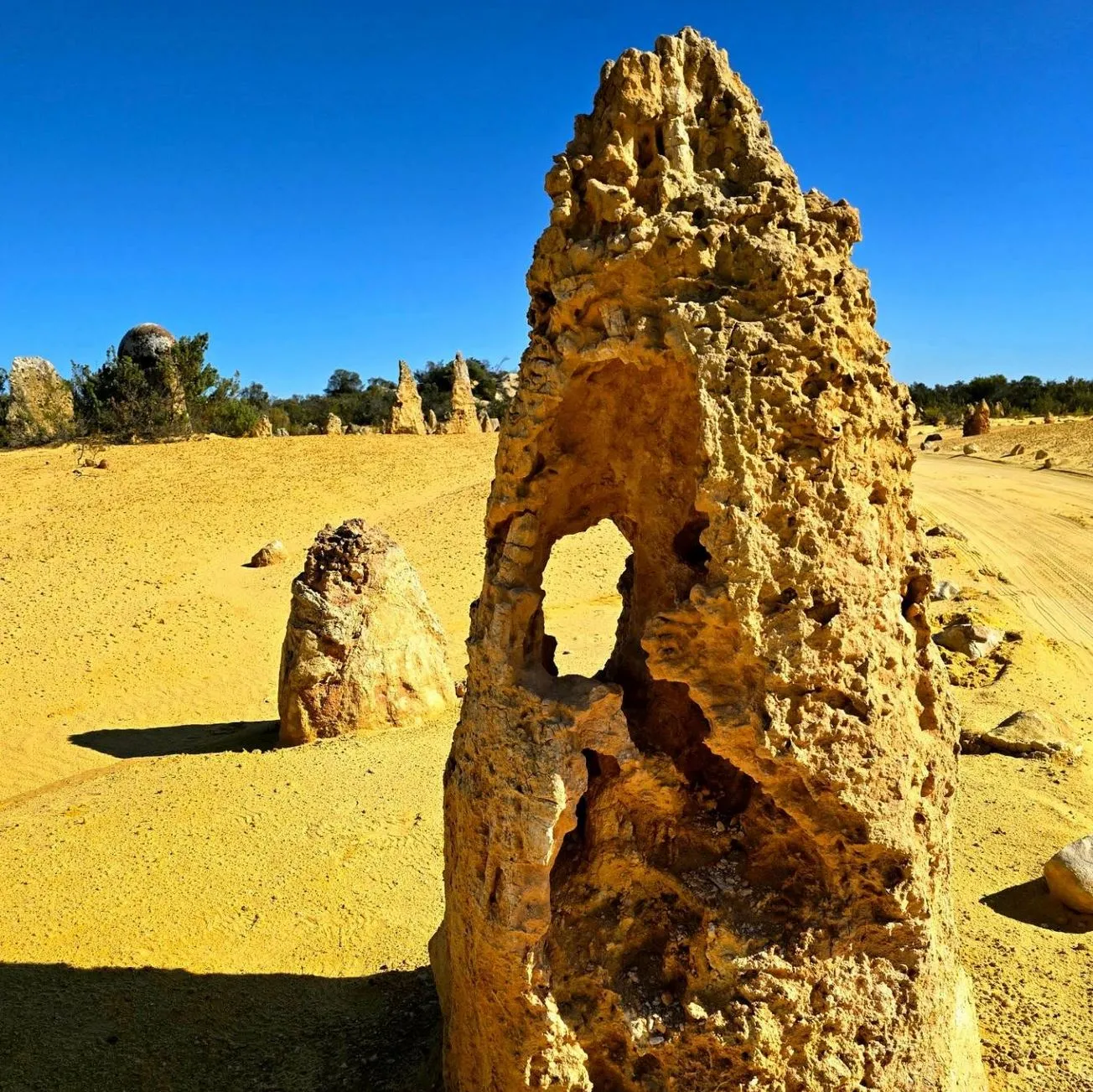
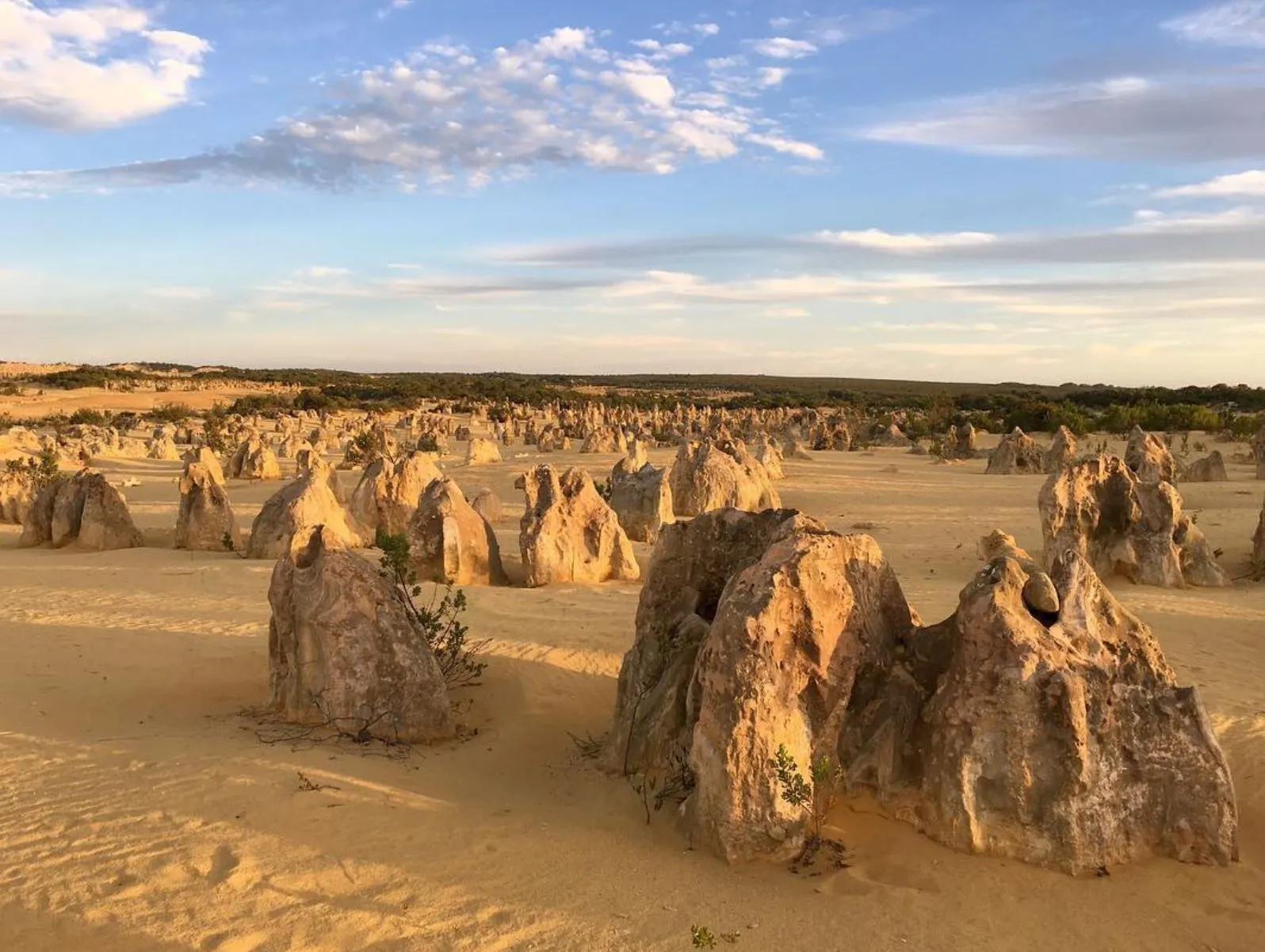
Standing among the Pinnacles feels like stepping into another planet. The desert stretches to the horizon, broken only by wind-rippled sand dunes and scattered limestone pillars. Underfoot, the ground tells its own story. The geological features you see — the hollows, grooves and ridges — are centuries old. Some spots hide tiny cave waterholes that collect rainwater, feeding hardy shrubs and desert blooms.
Protecting WA’s Ancient Desert Formations
The Pinnacles may look eternal, but even stone wears down. Scientists predict erosion will continue to shape the park slowly. The balance between tourism and preservation is delicate. The Department of Biodiversity, Conservation and Attractions (DBCA) work closely with local Aboriginal people and scientific teams to monitor the site. They use drone imaging and soil chemistry tests to track subtle changes caused by wind and rain. It’s a great example of science meeting cultural tourism — protecting both the physical and spiritual layers of the land. Every time I lead a group here, I remind them: take photos, not stones. Leave only footprints and let the Pinnacles speak for themselves.
Stats and Fun Facts That’ll Surprise You
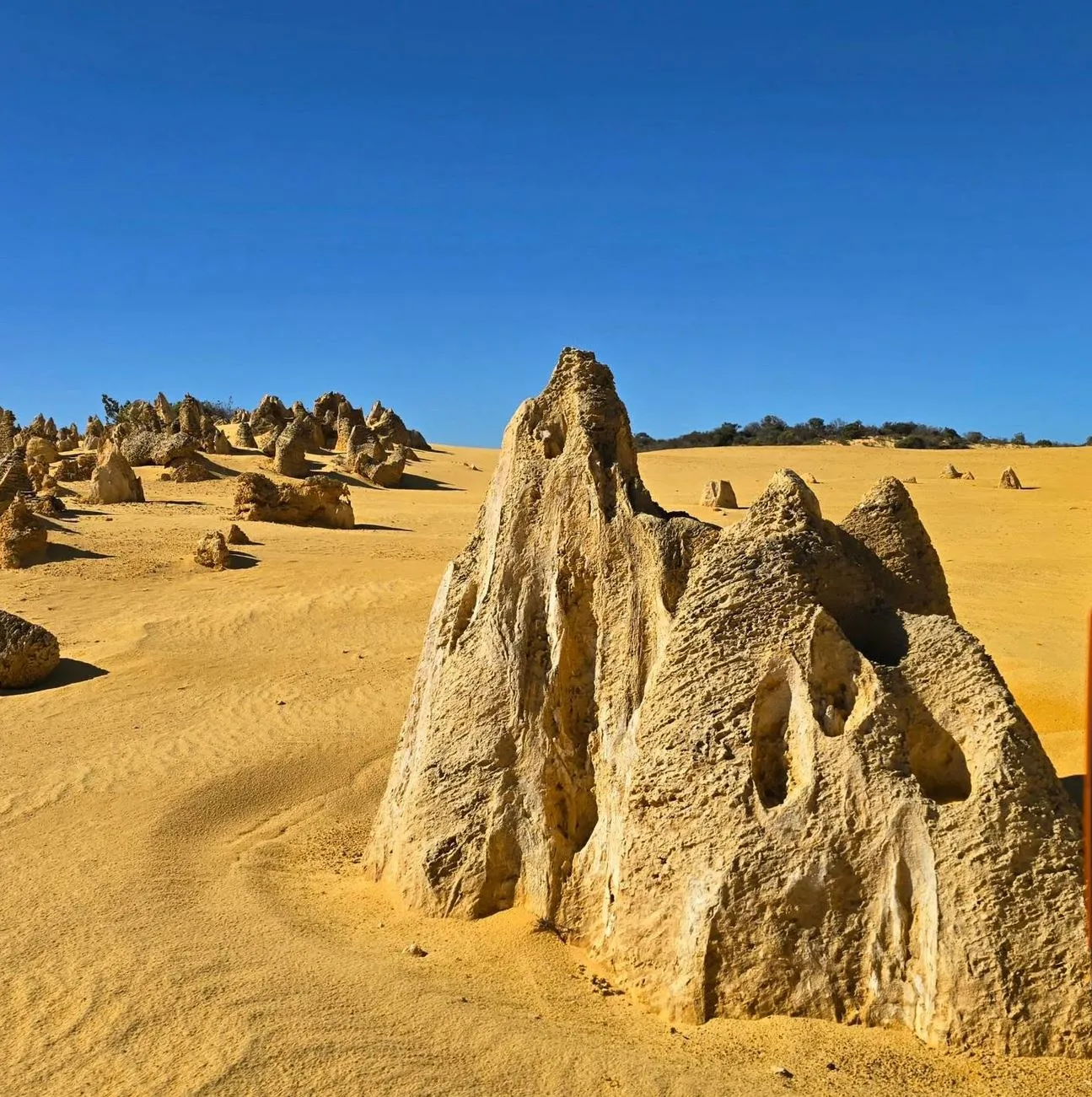
- Age: up to 25 million years
- Number of pinnacles: 50,000–60,000 over 190 hectares
- Tallest pinnacle: 5.3 metres
- Average height: 3.5 metres
- Annual visitors: 250,000+ (WA Parks, 2023)
- Dunes: 20 metres high in parts of Nambung
- Colours: yellow from iron-rich minerals, white from lime-rich sand, black from organic crusts
A Traveller’s Note
Every time I drive away from Nambung, I look back once more across that endless desert of stone spires. There’s something humbling about standing beside rocks older than humanity, knowing they began as grains of sand in a shallow sea. Whether you come alone or join a Pinnacles Tour from Perth, take your time. Watch the shadows stretch, listen to the wind through the dunes and let the silence settle in.
FAQ
What kind of rock are the Pinnacles?
Limestone formations — mainly calcium carbonate formed from ancient seashells compacted into lime-rich sand over millions of years.
Can I walk among the Pinnacles?
Yes, visitors can walk the walking trail or boardwalk trail, both of which offer close-up views of the limestone pillars. Just stay on the marked paths to protect the fragile environment.
Are the Pinnacles still forming today?
Not actively, but erosion continues to reshape them. Wind, rain and shifting dunes slowly expose and modify the rock formations, creating new pinnacle shapes over time.
How much does it cost to visit the Pinnacles?
Entry fees for Nambung National Park are around $17 per car or you can buy a holiday pass that covers multiple WA parks. If you join a Pinnacles Tour from Perth, fees are usually included.
What else can I see near the Pinnacles?
Nearby Cervantes has coastal adventures — sea lions, humpback whales, whale sharks and manta rays in season. It’s a great way to combine desert and marine environments in one trip.